  • Park Road, Kurnool
  • Monday – Saturday · 8:30 am – 5:00 pm
Peace English Medium School crest Peace English Medium School · Kurnool
Academics

Islamic education

Building faith, character and lifelong values — because education is truly meaningful only when it nurtures both the mind and the soul.

Our approach

Faith woven through the school day, not appended to it

Alongside academic excellence, we provide a comprehensive Islamic education that helps students develop a strong understanding of their faith, cultivate noble character, and practise Islamic values in their daily lives.

Our Islamic Studies curriculum is designed to inspire students to understand the teachings of the Holy Qur'an and the authentic Sunnah of Prophet Muhammad (ﷺ), enabling them to become responsible, compassionate and morally upright individuals.

“Indeed, in the Messenger of Allah you have an excellent example for whoever hopes in Allah and the Last Day and remembers Allah often.”

Surah Al-Ahzab (33:21)

Our programme encourages students to follow the noble example of Prophet Muhammad (ﷺ) by developing strong faith, good manners, honesty, compassion and respect for all.

Six strands

What students study

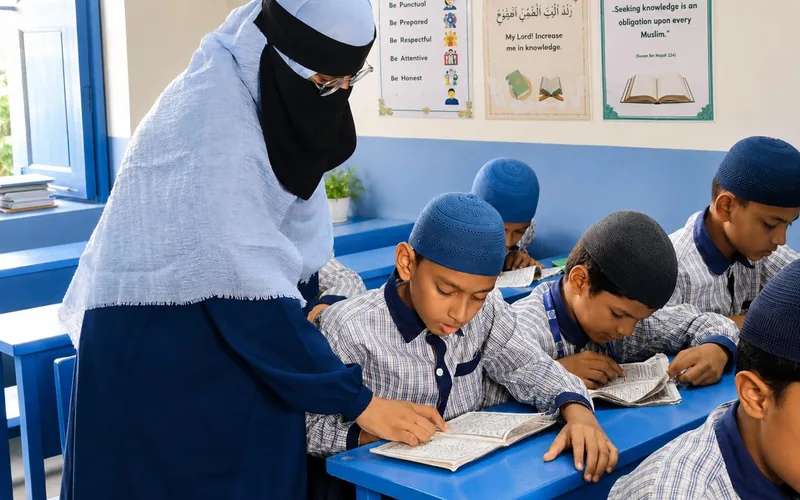
A teacher guiding students through their Arabic workbooks at their desks

Arabic Language (Al-Lughah)

Arabic is the language of the Holy Qur'an and holds a special place in Islam. Our programme enables students to develop reading, writing, speaking and comprehension skills while fostering a deeper connection with the Qur'an and Islamic literature. Through systematic instruction, students gradually build proficiency, making it easier to understand Islamic texts and appreciate the beauty of the language.
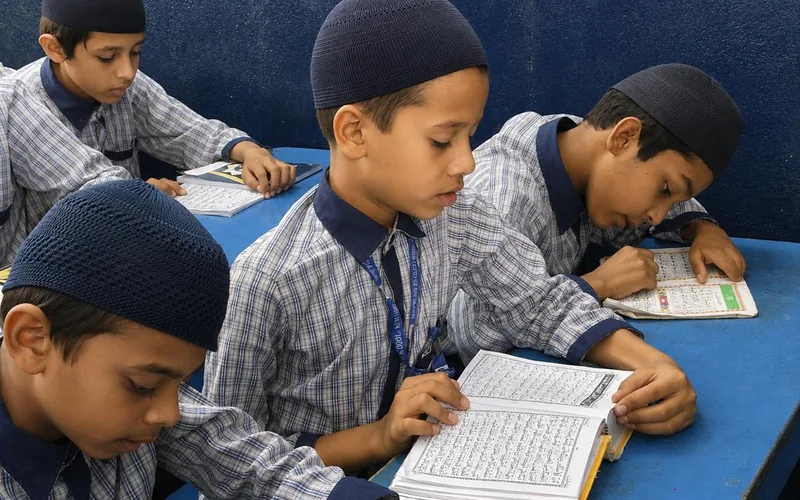
Students reciting from the mushaf at their desks during a Tilawah session

Qur'an Recitation (Tilawah with Tajweed)

Students are taught to recite the Qur'an with correct pronunciation and proper Tajweed, helping them develop confidence, fluency and reverence while reciting the words of Allah. This builds a lifelong relationship with the Qur'an through regular recitation and reflection.

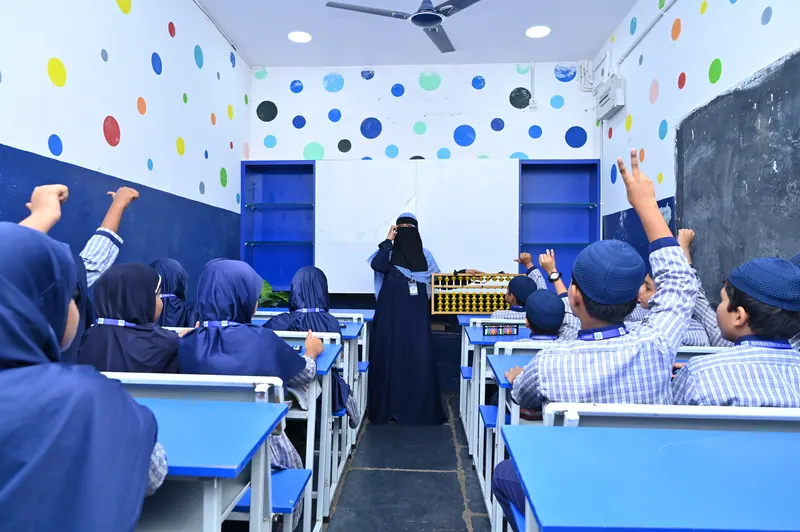
Students in an Islamic studies lesson at Peace English Medium School

Hadith & Seerah

Understanding the life and teachings of Prophet Muhammad (ﷺ) is an essential part of Islamic education. Students study selected Hadith and the inspiring Seerah, learning valuable lessons in faith, honesty, compassion, patience, leadership and social responsibility. The curriculum introduces authentic literature including Ar-Raheeq Al-Makhtum (The Sealed Nectar).

A student practising Arabic handwriting at their desk

Arabic Handwriting (Al-Khat)

Beautiful handwriting reflects discipline and attention to detail. Through Al-Khat, students learn proper Arabic handwriting, improving both their writing skills and their appreciation for the elegance of the Arabic script.

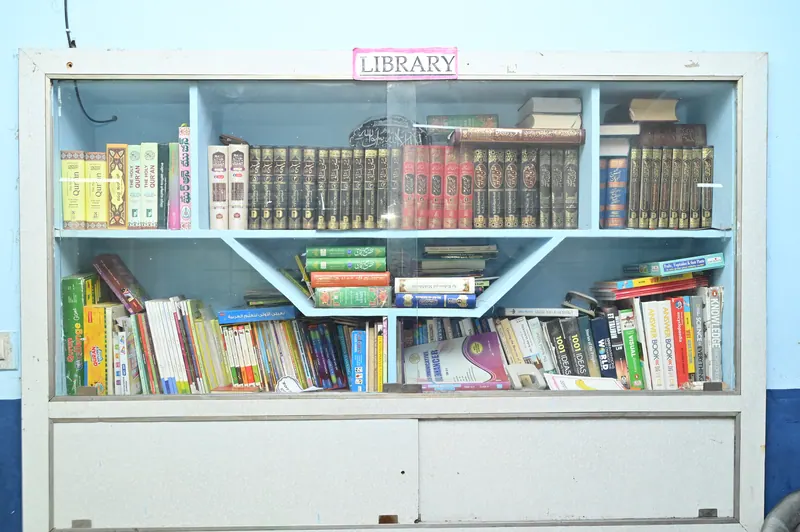
Books and reference material in the school library

Qur'an Translation (Tarjamatul Qur'an)

Understanding the meaning of the Holy Qur'an is essential for applying its teachings in everyday life. Our translation programme helps students understand selected verses, appreciate the wisdom and guidance they contain, and implement those teachings in their daily lives.

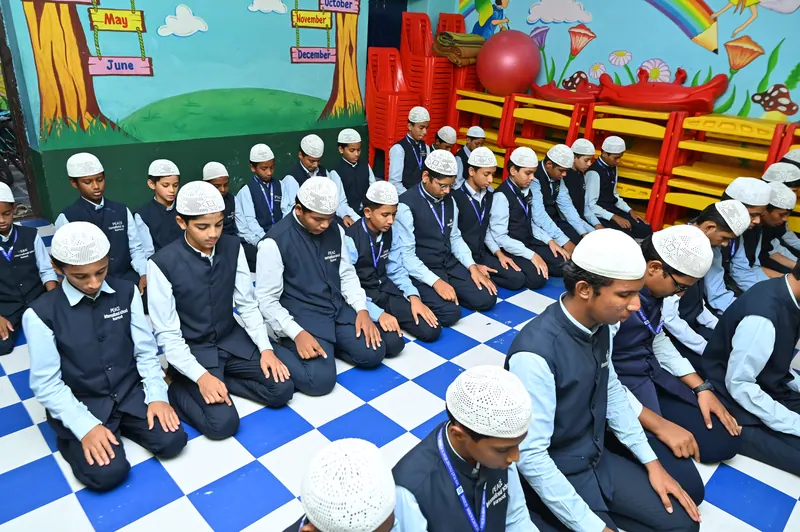
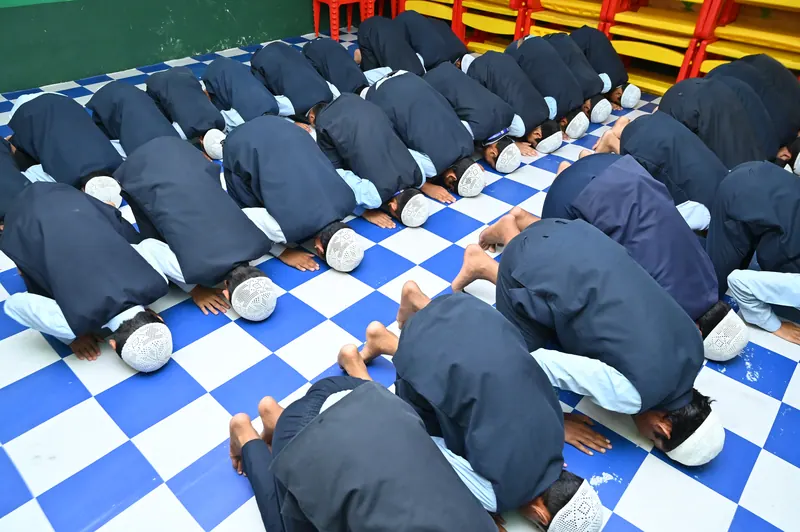
Students raising their hands in supplication during the school prayer

Islamic Studies & Character Development

We follow a structured Islamic Studies curriculum using quality resources from renowned publishers such as Darussalam. Students learn Islamic beliefs and values, worship and daily practices, good manners and etiquette (Akhlaq), Islamic history, prophetic teachings, respect for parents and teachers, and compassion, honesty and responsibility.

The Prophet Muhammad (ﷺ) said:

“Whoever recites a letter from the Book of Allah will receive one good deed, and each good deed is multiplied tenfold. I do not say that ‘Alif-Lam-Meem’ is one letter; rather Alif is a letter, Lam is a letter, and Meem is a letter.”

Jami' at-Tirmidhi

Our vision for Islamic education

At Peace English Medium School, Islamic education is not limited to classroom learning — it is a way of nurturing hearts, shaping character, and inspiring students to live according to the teachings of Islam.

By integrating faith with knowledge, we strive to raise a generation that is academically accomplished, spiritually grounded, morally responsible, and committed to promoting peace, harmony and mutual respect within society.

Knowledge enlightens the mind. Faith enriches the heart. Together, they build a better future.

Both halves of an education, under one roof

Speak to us about how the Islamic and academic programmes fit together across a school week.